Fahrkarten bitte!
Game Concept
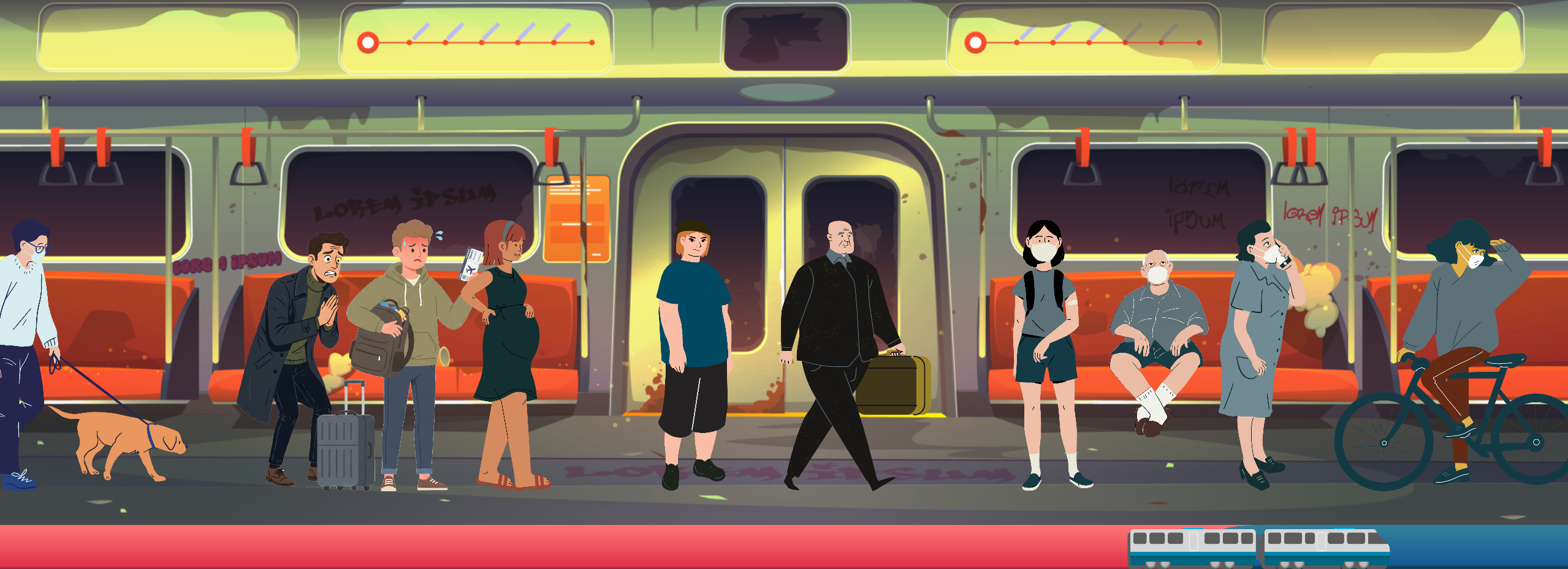
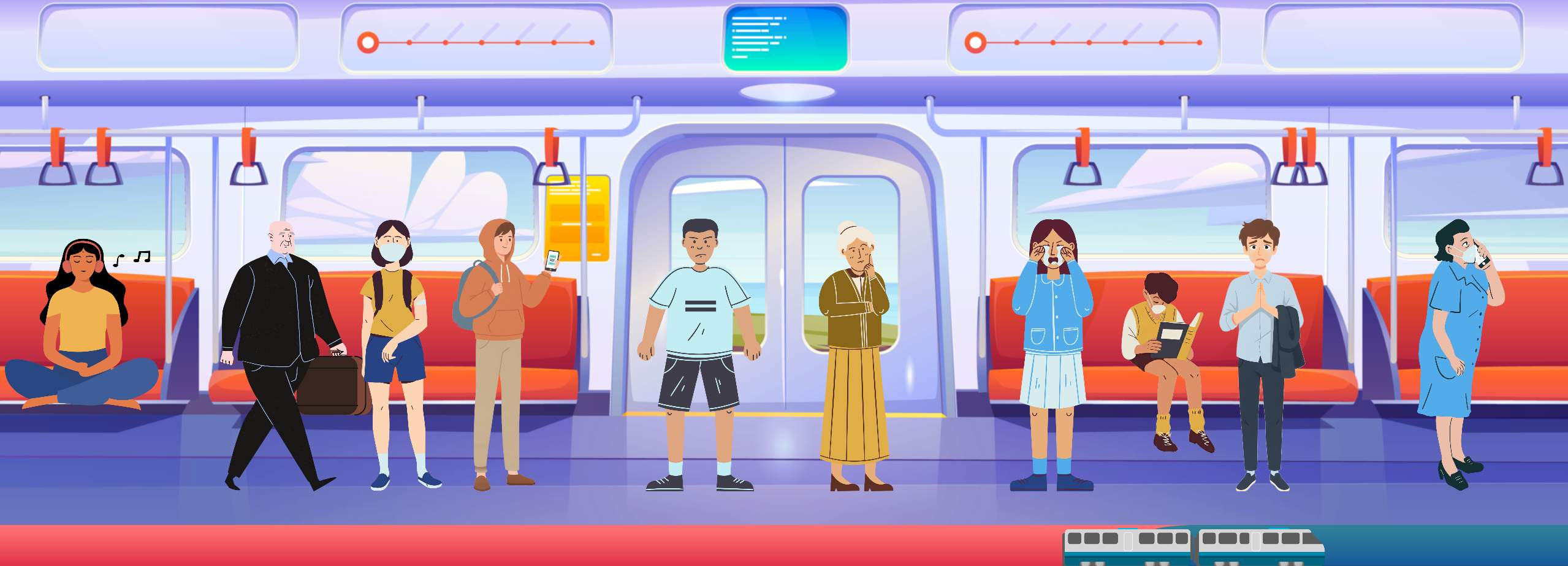
Fahrkarten bitte! is a short-session, single-player decision-making game set inside a train carriage.
The player takes the role of a ticket inspector and must inspect as many passengers as possible within a strict five-minute time window between stations. Each interaction presents moral dilemmas: passengers may lack valid tickets for understandable reasons, forcing the player to balance efficiency, empathy, and institutional rules under time pressure.
The game was developed as part of a university project on emotional accessibility, aiming to investigate how stress, ambiguity, and player choice can be scaled without relying on explicit violence or graphic content.
Core Mechanics
Gameplay is structured around repeated station-to-station loops:
- Players select passengers directly in the carriage view.
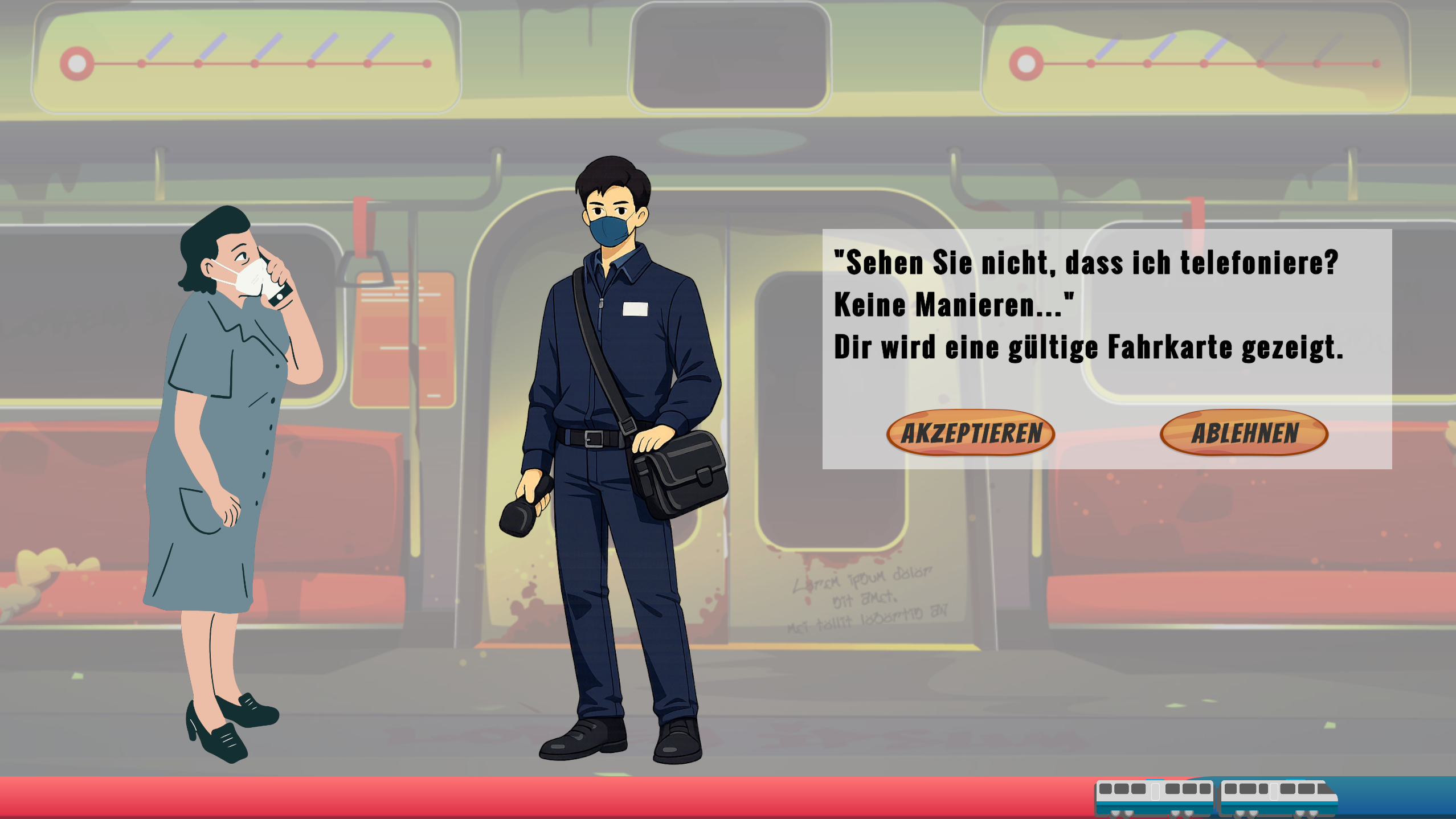
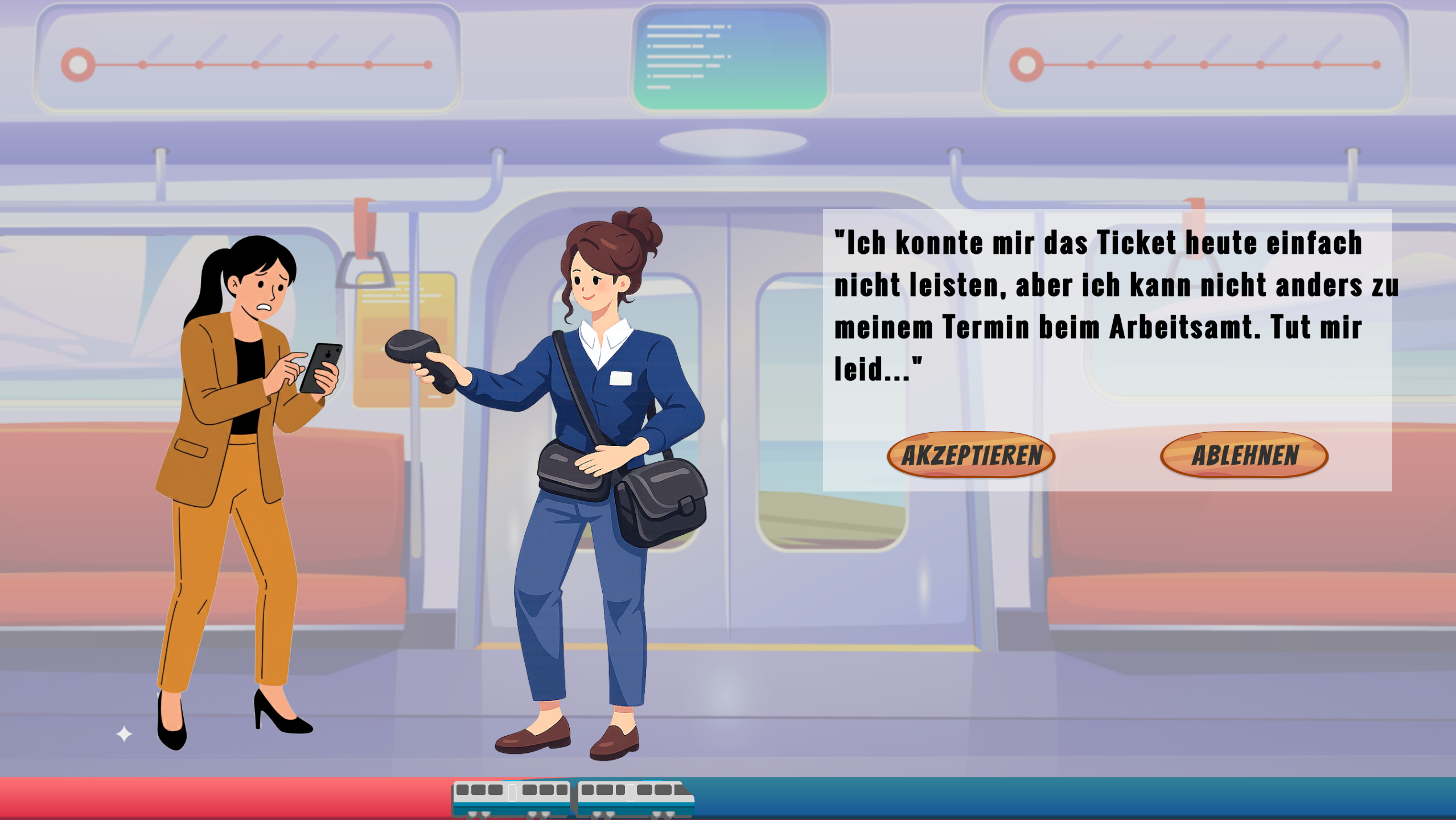
- Each inspection opens a dialog-based interaction with multiple-choicechoice-driven responses.
- At any point, the player must decide whether to allow the passenger to stay or eject them from the train.
- All decisions contribute to a final summary that evaluates consistency, strictness, and alignment with company goals.
Emotional Accessibility
A central design goal was to make emotionally stressful gameplay adjustable.
Players can modify:
- Visual atmosphere (light vs. dark themes)
- Background audio intensity
- Difficulty and passenger density
These parameters directly influence emotional load without changing the core mechanics, allowing the game to function both as entertainment and as a research tool.
Technical Implementation
- Engine: Unity (C#)
- Architecture: Model–View–Presenter (MVV)
- Version Control: GitLab
Gameplay sessions are logged automatically in structured XML files, enabling later analysis of player decisions and accessibility settings.
Team & Context
This project was developed in a multidisciplinary team as part of a computer science course at Karlsruhe Institute of Technology (KIT), combining game design, software engineering, and human–computer interaction research.